Key Offerings
- Comprehensive Education on Parkinson’s Disease:
Gain an in-depth understanding of PD physiology, etiology, stages, and symptoms—bridging neuroscience, pathology, and applied movement science. - The 11 “Absolute Must-Do” Exercise Mini-Sets:
Explore the foundational movement framework that supports mobility, posture, and independence for individuals with Parkinson’s. - Integration of the Pilates 4 Parkinson’s Method:
Learn the SPACE Format, cueing strategies, and specialized teaching tools designed to address neurodegenerative conditions through Pilates-based movement. - Evidence-Informed, Science-Driven Approach:
Study the neuroscience, fascia research, and movement science behind effective exercise interventions for Parkinson’s disease. - Practical Application & Real-World Case Work:
Conduct live case assessments, perform client evaluations, design PD-specific programs, and deliver a final practical presentation. - Professional Practice & Business Readiness:
Master client documentation, SOAP notes, waiver use, pricing structures, and marketing strategies for your Parkinson’s specialization. - Accessible & Inclusive Learning:
Available in Live, Hybrid, and Online Independent formats—with 20 NPCP CECs—ensuring flexibility and professional advancement.
Details
The Pilates 4 Parkinson’s Comprehensive Instructor Certificate Course is a 20-hour continuing education program designed for Pilates instructors, movement professionals, and health-oriented fitness specialists who wish to specialize in working with individuals living with Parkinson’s disease.
This immersive program offers an in-depth, scientifically grounded study of Parkinson’s disease—covering disease mechanisms, symptoms, and the physiological impact of movement. Participants learn to integrate the Pilates 4 Parkinson’s (P4P) Method, the 11 “Absolute Must-Do” Exercise Mini-Sets, and related neurocognitive tools to design safe, adaptable, and effective exercise programs for diverse stages of PD.
Each session includes a blend of lecture, guided practice, case scenarios, and applied teaching. Participants also receive comprehensive PDF course materials, including glossaries, reference lists, and documentation templates.
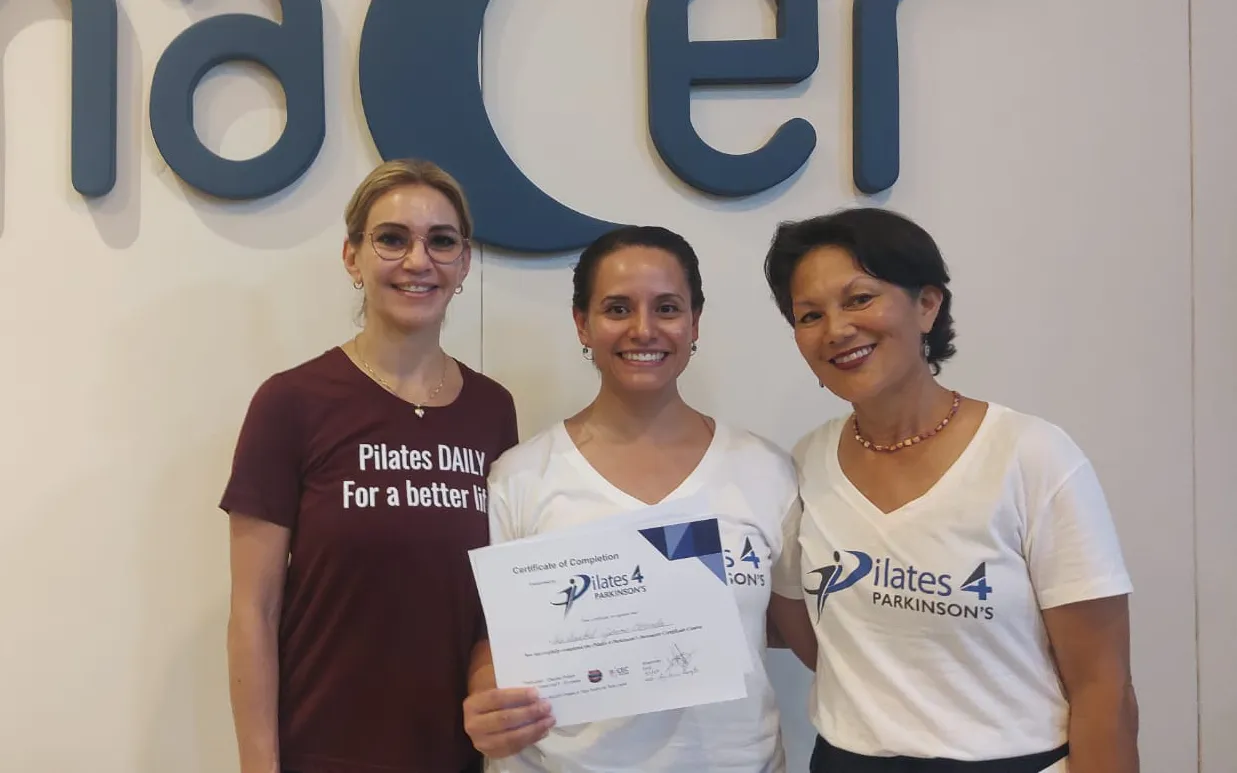
The course concludes with a live, 30-minute client presentation and private review session, ensuring full comprehension and practical competence. Successful completion grants 20 NPCP CECs.
Contact: Cecilia Pulido, MSc – [email protected]
Content
1. Understanding Parkinson’s Disease
- Diagnosis, physiology, dopamine function, etiology, DBS, stages, symptoms, medications, and treatment protocols
- Prodromal PD and multidisciplinary care
2. The 11 “Absolute Must-Do” Exercise Mini-Sets
- Deep dive into all 11 Mini-Sets with musculoskeletal, fascial, neurological, and physiological focus
- Understanding the “why” and “how” of each movement
3. Pilates 4 Parkinson’s Method
- SPACE Format, P4P stages, NLP applications, prediction error signaling, cueing, communication, and red flags
4. Pilates Principles Review
- Classical Pilates foundations correlated to PD needs
- Application across mat and apparatus repertoire
5. Parkinson’s Exercise Fundamentals
- Review of auxiliary training modes (7PM, PoMP, PaKua, CoreSpring, TRX) and their clinical rationale
6. Scoliosis, Fascia, and PD
- Understanding spinal asymmetry, scoliosis, and fascial adaptations in PD populations
7. Ambulation, Gait, and Freezing
- Foot mechanics, posture influence on gait, freezing prevention, and use of rhythmic cueing and music
8. Neuroscience and PD
- Neural pathways, neuroplasticity, neurocognitive and neurovisual training, cerebellar function
9. Assessments & P4P Formats
- Intake process, session structure, and documentation methods
10. Business Foundations
- Waivers, forms, client communication, marketing, and pricing structures
11. Programming & SOAP Notes
- Documenting progress, assigning home programs, and ensuring continuity of care
12. Practical Application Exam
- Final live case presentation with review and feedback session
Key Benefits
- Deep Expertise in Parkinson’s Disease:
Build a robust understanding of PD’s physiology, neuroscience, and practical management through exercise. - Proficiency in the P4P Method:
Confidently teach the 11 “Absolute Must-Do” Exercise Mini-Sets and apply the SPACE Format to various PD stages. - Applied Clinical and Movement Integration:
Connect anatomy, fascia, and neuroplasticity principles directly to movement execution. - Enhanced Teaching and Assessment Skills:
Learn to evaluate posture, stage of disease, and comorbidities to design safe, goal-based programs. - Expanded Career Pathways:
Earn recognized continuing education credits (NPCP/ACE) and position yourself as a certified Parkinson’s movement specialist. - Immediate, Real-World Application:
Graduate ready to implement PD-specific programs for clients, seniors, and individuals with mobility challenges. - Contribution to a Growing Need:
Join a global network of professionals supporting the world’s second-fastest-growing neurological condition with compassion, science, and skill.
Top 3 Takeaways
1. Comprehensive Mastery of the Pilates 4 Parkinson’s Method:
Develop full competence in integrating Pilates principles, neuroscience, and specialized exercise design to support individuals with Parkinson’s disease.
2. Practical and Professional Readiness:
Learn to assess, document, and deliver individualized PD exercise programs safely and effectively—from intake to implementation.
3. Empowerment Through Education:
Gain the confidence, scientific foundation, and teaching tools to become a trusted movement professional improving the lives of people with Parkinson’s disease and beyond.